
Double Cell publication: How industrialization changes our gut bacteria
Research teams from Kiel University and UKSH, led by Mathilde Poyet and Mathieu Groussin, have published two unique studies, systematically analyzing the impact of industrialization on the gut microbiome, its genetics and possible links to disease development.
The totality of bacteria, viruses and fungi that exist in and on a multicellular organism forms its natural microbiome. The interactions between the body and these microorganisms significantly influence the host organism’s functions and health. Among other things, researchers have shown that the microbiome plays an important role, for example, in defense against pathogens. On the other hand, they suspect that misbalances in the microbiome’s composition are linked to the development of so-called environmental diseases, such as chronic inflammation. Yet, several key questions in microbiome research remain unanswered: for instance, what exactly constitutes a healthy microbiome, which internal and external factors can alter it, and how does it differ between people, especially of different lifestyles and geographies.
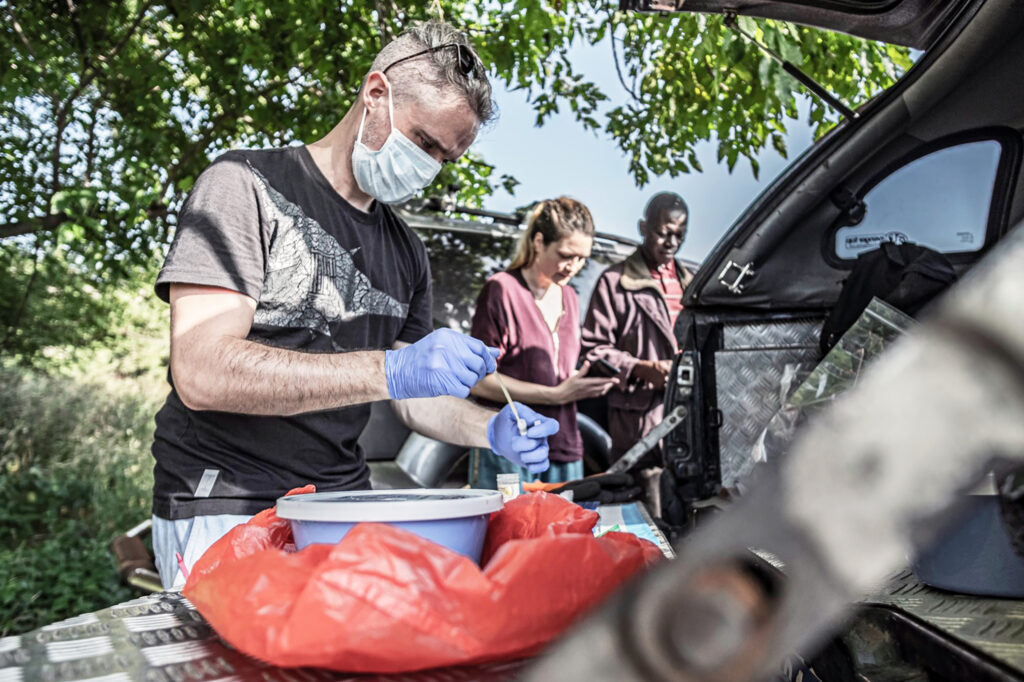
At Kiel University’s Medical Faculty and the University Hospital Schleswig-Holstein (UKSH), Campus Kiel, Professor Mathilde Poyet from the Institute of Experimental Medicine (IEM) and Professor Mathieu Groussin from the Institute for Clinical Molecular Biology (IKMB) are working on these challenges together with their research groups. Based on the hypothesis that microbiomes differ depending on the origin of a population group, they are specifically investigating how geography, lifestyle and the degree of industrialization affect the microbial colonization of the human gut. To tackle these questions, they founded the Global Microbiome Conservancy (GMbC) ten years ago. This global scientific initiative is committed, through the worldwide collection of microbial samples, to studying and conserving the full diversity of the human gut microbiome.
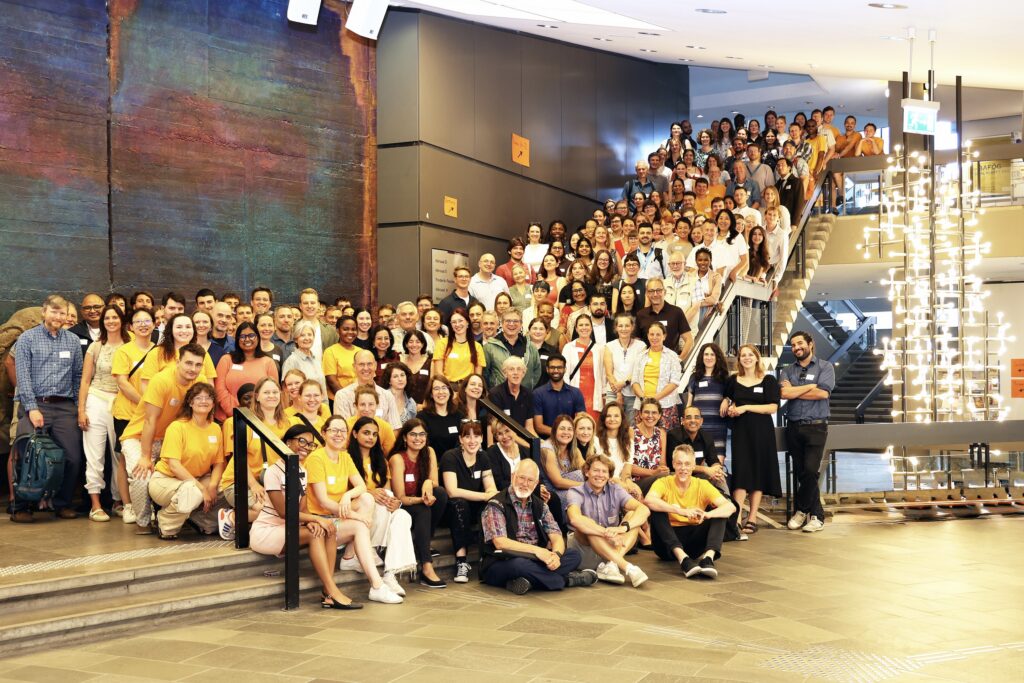
The Kiel-based researchers, who are leading the Kiel Metaorganism Center (KMC) as part of the Kiel University’s priority research area Kiel Life Science (KLS), and are also active in the Collaborative Research Centre (CRC) 1182 „Origin and Function of Metaorganisms“, and the Cluster of Excellence „Precision Medicine in Chronic Inflammation“ (PMI), have published the joint papers in collaboration with a number of international experts. In these publications, they have systematically analyzed key factors such as geography, lifestyle, diet and genetics as cumulative effects of civilization on the human microbiome and individual gut bacteria. In particular, they were able to reveal that industrialization and the associated lifestyle changes lead to a drastic depletion and strong homogenization in the biodiversity of the microbiome.
Furthermore, the Kiel research team was able to demonstrate that, in addition to perturbations observed at the level of microbial communities, the individual microbial genomes also mutate in response to the level of industrialization of the host. For instance, a heavily industrialized lifestyle results in the increase of the size of bacteria genomes, due to increased genetic exchange between microbes. Uniquely, both papers, including contributions from colleagues from the Massachusetts Institute of Technology (MIT) and numerous international partner institutions of the GMbC initiative, were published in parallel today in the prestigious journal Cell.
High degree of industrialization yields to less diverse and more homogeneous
The microbial colonization of the human gut is subject to numerous endogenous and exogenous factors. Some of these can only be altered indirectly and over the long term, such as the host’s genetics, whilst others depend heavily on individual lifestyle. In the current studies, the researchers analyzed data from the GMbC sample collection with regard to the degree of industrialization and also took into account lifestyle, microbial genetics and diet as factors directly influencing the composition of the microbiome. According to the researchers, whilst all these influences interact strongly with one another, they also contribute individually to variations in the gut microbiome.
“The key finding of our analyses is that the so-called industrialized lifestyle leads to more homogeneous and less diverse microbial communities in our gut,” emphasizes Groussin. “This means that, two people from Kiel, Germany and Kuala Lumpur, Malaysia have very similar compositions of bacterial species, despite living in distant geographies and having very different diets, genetic background and cultures.”
Industrialized microbiomes are more easily disturbed and associated with elevated disease markers
In a following step, the scientists investigated whether perturbations in diversity and composition associated with industrialization could result in changes in the way bacteria co-occur and interact. They found that networks of co-occurrence of bacteria are more concentrated around a smaller number of bacteria, with lower levels of functional backups. “In fine, this means that if the community is perturbed and these hub species are lost, there could be no functional backup provided by other species in the community to maintain metabolic productivity and community stability”, Poyet points out.
In addition, the researchers were able to detect elevated levels of so-called inflammatory markers in samples from people living in highly industrialized societies – that is, specific molecular signatures associated with stress responses in the gut. These include, for example, an increased immune response, particularly in the gut’s mucosal layer, which the researchers interpret as a reaction to changes in microbiome composition. “The presence of both elevated inflammatory markers and the distinctive patterns in the immune response suggest that a microbiome altered by an industrialized lifestyle may exert a strong influence on the host’s physiology – and thus potentially contribute to the development of disease,” stresses Professor Philip Rosenstiel, Director of the Institute of Clinical Molecular Biology and co-author of the first study.
In future, the Kiel-based researchers intend to investigate in detail exactly which specific changes might make the industrially shaped microbiome more easily disrupted, subsequently leading to disease development or increased susceptibility to infections. To this end, the GMbC biobank, with its preserved microbiomes from around the world, provides them with a vital resource that enables such further mechanistic investigations to be carried out within their geographical contexts.
The influence of lifestyle on bacterial genomes
In the second study, the researchers compared 10 selected bacterial species from the microbiomes of non-industrialized versus industrialized populations and examined them for genetic changes that might be linked to lifestyle. “In all the microorganisms analyzed, we observed that an industrialized lifestyle leads to greater genome size and genomic plasticity. This means that the genome undergoes more changes with, for example, increased frequency of gene exhange via horizontal gene transfer, which can help bacteria to rapidly acquire new functions to adapt to perturbations,” says Dr Malte Rühlemann, Postdoctoral researcher from the Groussin lab. “Beyond gene transfers, we found a large diversity of genomic mutations that are associated with industrialization, including individual DNA mutations that change the sequence and function of proteins involved in stress response and metabolic response to the environment” according to Poyet.
In summary, with their new dual publication, the researchers have, for the first time, presented a comprehensive study on how industrialized lifestyles profoundly impact the gut microbiome complex system at different levels of the organization, from microbial communities to the individual genomes of microbes. Moving forward, while expanding the GMbC cohort among additional countries from around the world, they intend to further investigate the mechanisms underlying industrialization-associated microbiome perturbations that could be at the root of the rise in chronic diseases observed worldwide.
Original publications:
Mathilde Poyet, Malte Rühlemann, […], Eric J. Alm, Mathieu Groussin (2026): Industrialization drives convergent microbial and physiological shifts in the human metaorganism. Cell
Published online: 2 November 2026 https://doi.org/10.1016/j.cell.2026.10.016
Malte Rühlemann, Yue Ma, […] Eric J. Alm, Mathieu, Groussin, Mathilde Poyet (2026): Convergent genomic responses of human gut bacteria to variations in industrialization. Cell
Published online: 2 November 2026 https://doi.org/10.1016/j.cell.2026.10.014
Contact:
Prof. Mathieu Groussin
Genomics and Functions of Host Microbiome Systems (Head)
Institute for Clinical Molecular Biology,
UKSH/Medical Faculty, Kiel University:
Phone: +49 431-500 -15198
Email: m.groussin@ikmb.uni-kiel.de / Website: mmmicrobiomelab.org
Prof. Mathilde Poyet
Intestinal Microbiology (Head)
Institute for Experimental Medicine,
UKSH/Medical Faculty, Kiel University:
Phone: +49 431-500 -15140
Email: m.poyet@iem.uni-kiel.de / Website: mmmicrobiomelab.org
More information:
Genomics and Functions of Host Microbiome Systems,
Institute for Clinical Molecular Biology, UKSH/Medical Faculty, Kiel University:
www.ikmb.uni-kiel.de/research-group/genomics-and-functions-of-host-microbiome-systems
Intestinal Microbiology
Institute of Experimental Medicine (IEM)
www.iem.uni-kiel.de/forschungsgruppen/evolutionary-medicine/intestinal-microbiology/
Global Microbiome Conservancy (GMbC):
microbiomeconservancy.org
Priority research area Kiel Life Science (KLS), Kiel University:
www.kls.uni-kiel.de
Cluster of Excellence „Precision Medicine in Chronic Inflammation“ (PMI):
www.precisionmedicine.de