Kiel University further involved in two significant CIFAR research programmes
Kiel researchers Eva Stukenbrock and Thomas Bosch, both fellows of the Canadian Institute for Advanced Research (CIFAR), will continue to contribute to the recently extended research programmes on microbiome and fungal research at the renowned Canadian think tank.
The Canadian Institute for Advanced Research (CIFAR) in Toronto is one of the world’s most prestigious research institutes, bringing together leading scientists from around the globe and across a range of disciplines. Selected by an independent jury on the basis of their scientific excellence, these CIFAR Fellows are currently working together on 15 research programmes to find solutions to global societal challenges in the fields of health, technology and the environment. Since the institute was founded, a total of 23 Nobel Prize winners have been members, and currently around 500 scientific members from 161 institutions and 18 countries belong to this renowned circle.
Eva Stukenbrock, Professor for Environmental Genomics at Kiel University and Fellow at the Max Planck Institute for Evolutionary Biology in Plön (MPI-EvolBio), and Thomas Bosch, Professor for Cell and Developmental Biology at Kiel University, have been part of this community of scientific thought leaders for many years. As the institute announced a few days ago in Toronto, CIFAR is now continuing two research programmes central to the life sciences, ‘Humans & the Microbiome’, which Bosch has been part of since 2016, and ‘Fungal Kingdom’, which Stukenbrock was elected to in 2019, for another five years.
“As Kiel University, representation in internationally recognised research institutes such as CIFAR is of fundamental importance. Our qualities as a leading research location, especially in the life sciences, thus also carry weight on this global stage. With Eva Stukenbrock and Thomas Bosch, two of our most internationally recognised researchers are rightly represented as CIFAR-Fellows and are helping to contribute Schleswig-Holstein’s expertise to global problem-solving strategies,” emphasises Professor Eckhard Quandt, Kiel University’s Vice-President for Research.
Humans & the Microbiome
In this CIFAR programme, a group of around 40 scientists is researching the interactions between the microbiome and host organisms as a key factor in central life processes. This community of microbial symbionts, which colonise all multicellular organisms, influences the health, development and even behaviour of their hosts. The ‘Humans & the Microbiome’ programme brings together researchers from anthropology, biology and medicine to investigate the effects on human health in particular, as well as individual and social behaviour. With this multidisciplinary approach, Bosch and his colleagues aim to improve treatment options for a wide range of microbiome-associated diseases in the long term and also seek solutions to non-medical societal challenges related to the microbiome.
Fungal Kingdom: Threats & Opportunities
Again around 40 international experts are working together in this research programme to explore the complexity of the fungal kingdom using a multidisciplinary approach. Around six million species of fungi on Earth influence health, food security and the environment in many different ways, for example as producers of antibiotics, dangerous pathogens, necessary members of ecosystems and as invasive species. The fungal kingdom thus encompasses diverse and complex potentials as well as dangers. Stukenbrock and her colleagues in the CIFAR programme ‘Fungal Kingdom: Threats & Opportunities’ will continue to contribute to the development of novel strategies for managing the risks fungi pose and also for harnessing their potential.
Kiel contributions to the life sciences on a global scale
The fact that the leading Canadian research institution will continue to rely on this expertise from Kiel in the future underscores the internationally recognised role that Stukenbrock and Bosch play in their scientific fields. Stukenbrock has distinguished herself through outstanding research on the relationships between plants and microorganisms, the underlying evolutionary genomics and future applications in sustainable plant protection. At Kiel University, she is also committed to bringing together plant researchers from various disciplines at the Kiel Plant Center (KPC), which she heads, to jointly establish a scientific basis for maintaining plant health.
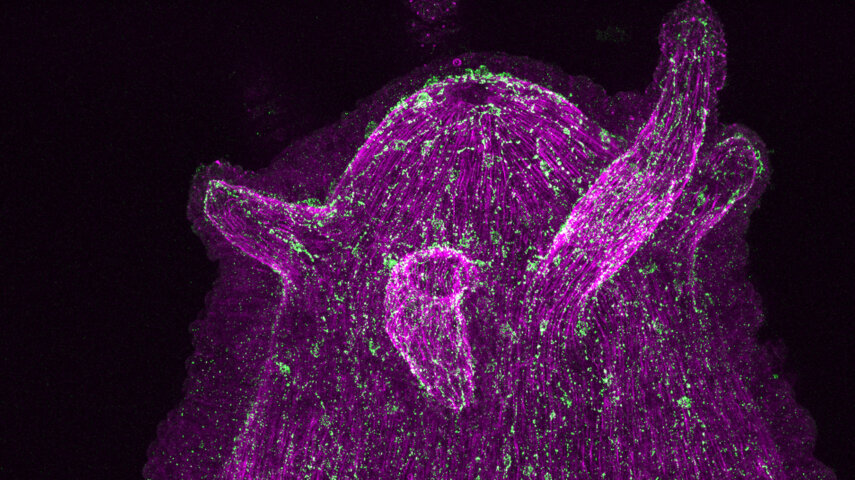
The pioneering research conducted by Bosch on the relationships between living organisms, microorganisms and the environment, and their interaction as a functional unit, has made him a leading authority in metaorganism research. In Kiel, this research is conducted at the highest level within the framework of the Collaborative Research Centre 1182 ‘Origin and Function of Metaorganisms’ and in numerous other research projects focusing on the microbiome within Kiel University’s priority research area Kiel Life Science (KLS).
Images are available for download:
https://www.uni-kiel.de/de/pressemitteilungen/portraitbilder/eva-stukenbrock.jpg
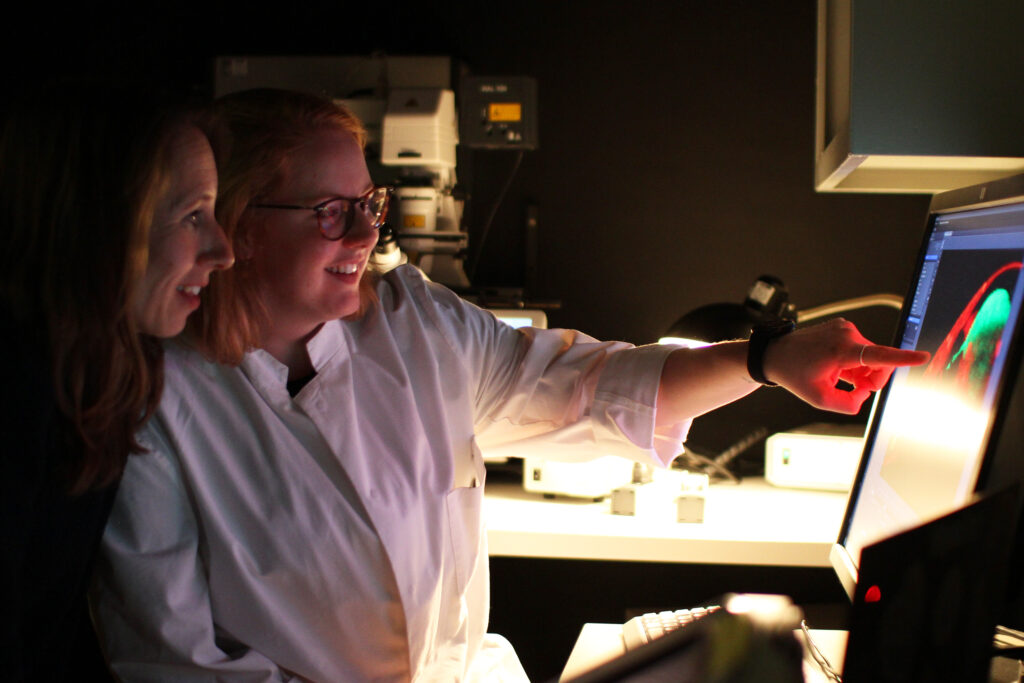
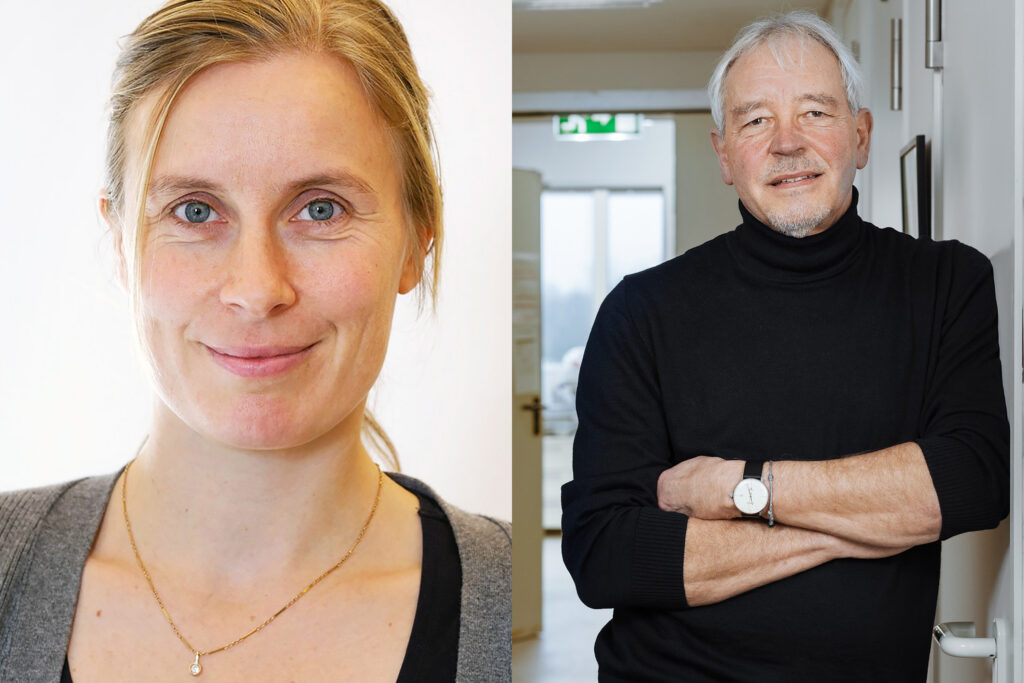
Caption: Eva Stukenbrock, Professor of Environmental Genomics at Kiel University and MPI-EvolBio, has been a CIFAR Fellow since 2019 and is a member of the ‘Fungal Kingdom’ research programme.
© Stefan Kolbe
https://www.uni-kiel.de/de/pressemitteilungen/News/bosch-buchvero__ffentlichnug-autor.jpg
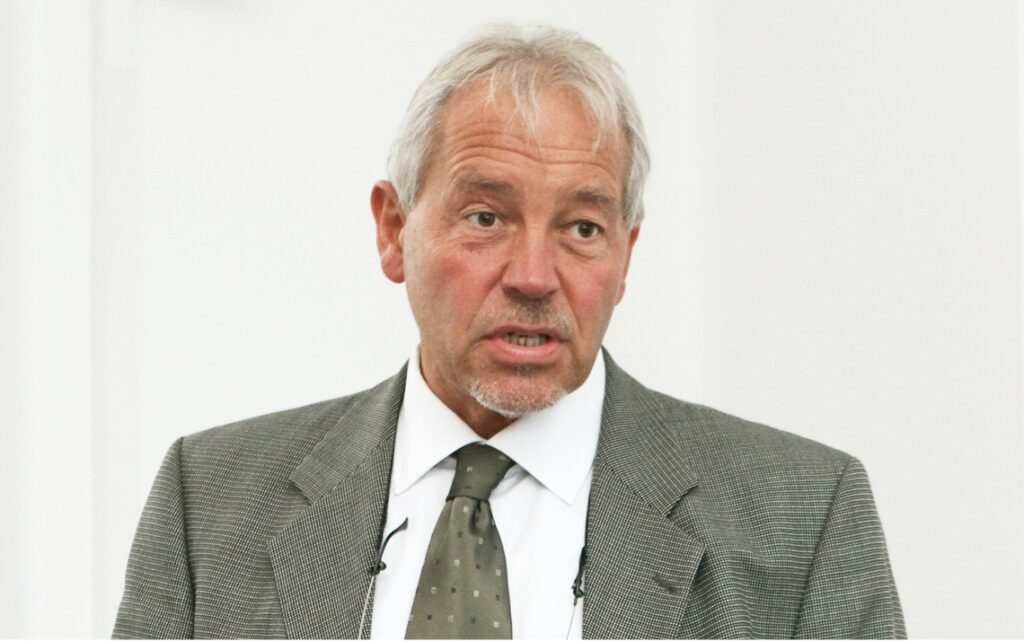
Caption: Thomas Bosch, Professor of Cell and Developmental Biology at Kiel University, was appointed a CIFAR Fellow in 2016 and has been contributing to the ‘Humans & the Microbiome’ research programme ever since.
© Enver Hirsch
Contact:
Prof. Eva Stukenbrock
Environmental Genomics Group (Head), Botanical Institute,
Kiel University / Max-Planck-Institute for Evolutionary Biology, Plön
Phone: +49 431-880-4274
Email: estukenbrock@bot.uni-kiel.de
Prof. Thomas Bosch
Cell and Developmental Biology Group (Head)
Zoological Institute, Kiel University
Phone: +49 431-880-4170
EMail: tbosch@zoologie.uni-kiel.de
More information:
Canadian Institute for Advanced Research (CIFAR):
www.cifar.ca
Research Programme “Fungal Kingdom: Threats & Opportunities”, CIFAR:
www.cifar.ca/research/programs/fungal-kingdom
Research Programme “Humans & the Microbiome”, CIFAR:
cifar.ca/research-programs/humans-the-microbiome
Environmental Genomics Group, Botanical Institute,
Kiel University / Max-Planck-Institute for Evolutionary Biology, Plön:
www.evolbio.mpg.de/2984078/environmentalgenomics
Priority research area Kiel Life Science (KLS), Kiel University:
www.kls.uni-kiel.de
CIFAR-News, 04.03.2026, Programme Decisions 2025/2026:
cifar.ca/cifarnews/2026/03/04/cifar-announces-research-program-decisions-for-2025-2026