
One million euros from VolkswagenStiftung for CRC 1182 member Olivia Roth
Professor at Kiel University has received funding from the VolkswagenStiftung Momentum Initiative for recently tenured professors to advance her translational evolutionary research on the relationship between reproductive strategy and the immune system, and its significance for gender-sensitive medicine
Professor Olivia Roth, head of the Marine Evolutionary Biology Research Group at Kiel University, has received a grant from the VolkswagenStiftung under the “Momentum – Funding for Recently Tenured Professors” scheme, as the Hanover-based institution announced yesterday. With these substantial funds, the Kiel-based evolutionary biologist will be able to further develop the infrastructure of her relatively new professorship at Kiel University’s Zoological Institute and strategically advance her field of research. Specifically, she will launch the project “New model systems to unravel the coevolution of reproductive strategy & immunity,” set to begin in late 2026, and establish novel evolutionary biological model systems – in this case, various fish species – along with the necessary infrastructure at her laboratory. By studying these fish with unconventional reproductive strategies, Roth and her research team aim to investigate how the immune system, different lifestyles, and reproductive strategies have co-evolved.
Through the Momentum Initiative, the VolkswagenStiftung supports newly appointed professors to help them develop their own independent research profiles during the early stages of their tenure. “I would like to extend my heartfelt congratulations to Olivia Roth on this special recognition. The competition for Momentum funding is extremely fierce; only the most successful newly appointed professors are selected. With her excellent research, Olivia Roth is providing important impetus for translational evolutionary research and helping to further raise the international profile of this research focus at Kiel University,” emphasizes Professor Eckhard Quandt, Vice President for Research.
Co-evolution of reproductive strategy and the immune system
Traditionally, biological sex has been regarded as a key regulator of immune function, leading to significant differences in the immune response and, consequently, in susceptibility to disease, for example. In females, a stronger innate and adaptive immune response is generally assumed – which can lead, for example, to better infection control but also to an increased risk of autoimmune diseases.
However, new research findings suggest that, in addition to biological sex, an organism’s reproductive strategy can also have a significant influence on immune regulation. For this reason, the researchers in Kiel aim to study organisms that employ unconventional reproductive strategies – such as sex changes during their lifespan or certain forms of pregnancy that are unusual for fish. “Our research project aims to develop new model systems that will allow us to study such unusual lifestyles. We want to focus specifically on organisms with shifting gender roles, in which males, for example, exhibit immune patterns typically associated with females. This allows us to examine sex separately from reproductive strategy and thereby decipher its effects on the immune system more precisely,” says Roth, who is involved in various evolutionary biology research initiatives at Kiel University, including the Kiel Evolution Center (KEC), the Research Training Group (RTG) TransEvo, and the Collaborative Research Center (CRC) 1182 “The Origin and Function of Metaorganisms.”
Fish species with unusual reproductive strategies as novel model systems
As part of this funding, Roth and her research group – which is located at the intersection of Kiel University’s priority research areas Kiel Life Science (KLS) and Kiel Marine Science (KMS) – plan to first introduce novel model systems into their laboratory for future research. Specifically, these are two families of bony fish: coral gobies and poeciliids. They are particularly well-suited for these research questions because they exhibit special characteristics such as the ability for bidirectional sex change, the occurrence of hermaphroditism, viviparity, or the presence or absence of brood care behaviour. “In addition, these fish are particularly well-suited for our evolutionary biology experiments: they have short generation times, are easy to keep, and allow for genetic manipulation. Thanks to funding from the VolkswagenStiftung, we can create the appropriate husbandry conditions in our laboratory and thus establish ideal conditions for our planned research program,” Roth emphasizes.
Future application of principles from evolutionary biology to human medicine
Building on this, the research team will focus in the future on key questions regarding the relationship between reproductive strategy and the immune system: “To this end, we intend to investigate, among other things, the role of hormones and genetics, as well as external factors such as lifestyle, the microbiome, and environmental influences,” says Roth. Overall, the researchers aim to contribute to a more comprehensive and nuanced understanding of how reproductive strategies evolve in tandem with immunity and health by establishing innovative models, the researcher adds.
Another key focus of the project is its potential translation into clinical applications: “There are currently significant gaps in our understanding of the relationship between sex and the immune system and its implications for everyday clinical practice – which is often reflected in medicine primarily focussing on men. “With our findings based on evolutionary model systems, we hope to help reduce this medical inequality between the sexes – and thereby make an important overall contribution to improving the diagnosis and treatment of gender-specific diseases in the future,” the Kiel-based evolutionary biologist looks ahead.
Images are available for download:
www.uni-kiel.de/de/pressemitteilungen/2026/053-roth-vw-momentum-group.jpg
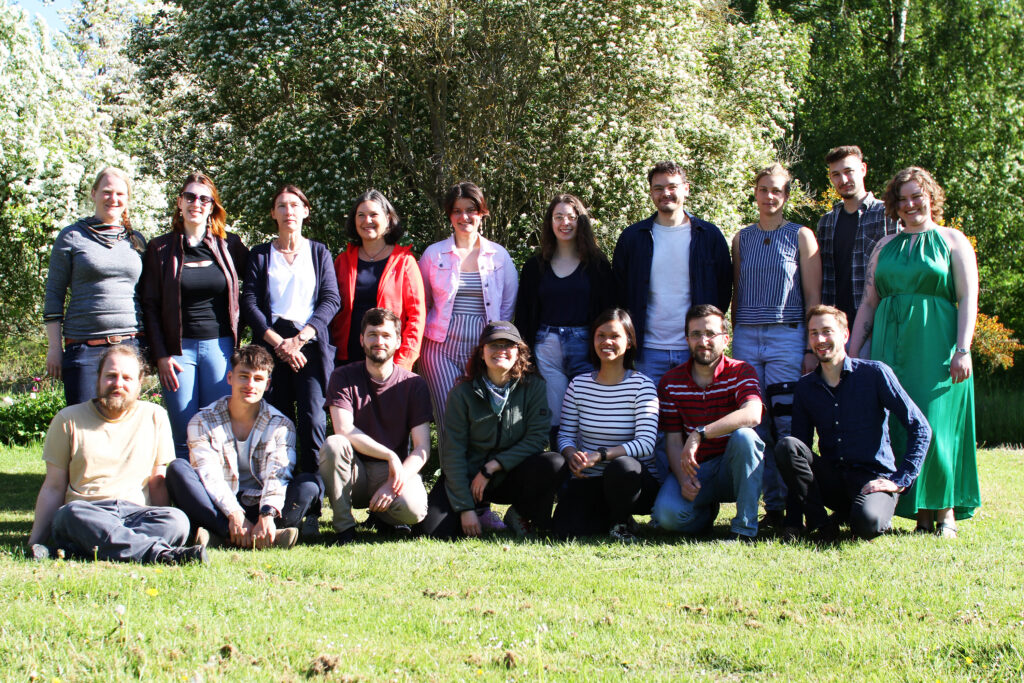
Caption: Prof. Olivia Roth (back row, far left), pictured here with her Marine Evolutionary Biology research group, has been awarded a Momentum grant from the VolkswagenStiftung to further develop the infrastructure of her professorship and strategically advance her field of research.
© Christian Urban, Kiel University
www.uni-kiel.de/de/pressemitteilungen/2026/053-roth-vw-momentum-lab.JPG
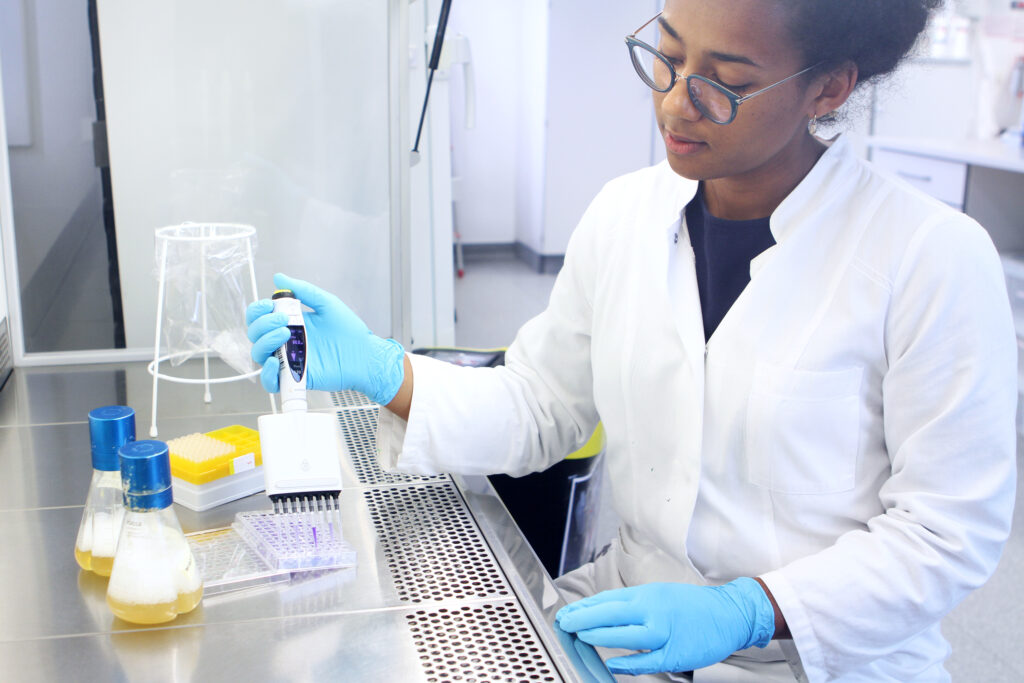
Caption: By studying fish with unconventional reproductive strategies, Roth and her research team aim to investigate how the immune system, different lifestyles, and reproductive strategies have co-evolved.
© Christian Urban, Kiel University
www.uni-kiel.de/de/pressemitteilungen/2026/053-roth-vw-momentum-fish.jpg
Caption: Coral gobies (pictured here) and poeciliids are well suited to these investigations as they exhibit specific characteristics such as they exhibit special characteristics such as the ability for bidirectional sex change, the occurrence of hermaphroditism, viviparity, or the presence or absence of brood care behaviour
© Prof. Olivia Roth
Contact:
Prof. Olivia Roth
Marine Evolutionary Biology
Zoological Institute, Kiel University
Phone: +49 431 880-4136
Email: oroth@zoologie.uni-kiel.de
More information:
Marine Evolutionary Biology (Roth Lab)
Zoological Institute, Kiel University:
marevol.online
DFG Research Training Group (RTG) TransEvo, Kiel University:
transevo.de
Kiel Evolution Center (KEC), Kiel University:
www.kec.uni-kiel.de
Priority research area Kiel Life Science (KLS), Kiel University:
www.kls.uni-kiel.de
Priority research area Kiel Marine Science (KMS), Kiel University:
www.kms.uni.kiel.de
Momentum – Funding for Recently Tenured Professors, VolkswagenStiftung:
www.volkswagenstiftung.de/de/foerderung/foerderangebot/momentum-foerderung-fuer-erstberufene
Press release from VolkswagenStiftung on new Momentum Initiative grants, March 31:
www.volkswagenstiftung.de/en/news/brief/momentum-eu113-million-fresh-ideas-professorship