
Joint TransEvo & CRC Christmas Event
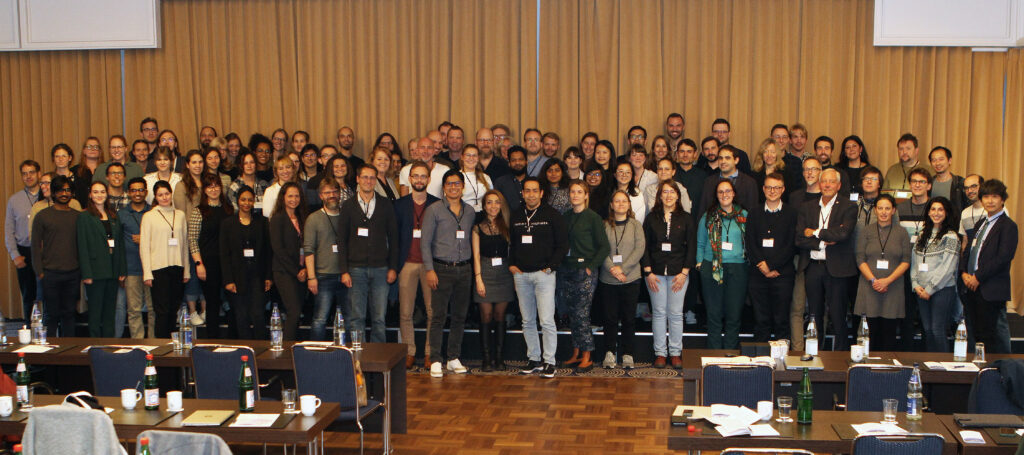
All members of CRC 1182 and TransEvo are warmly invited to join the Christmas event on the afternoon of 16 December 2026.
The event will feature two exciting talks on topics of interest to both scientific communities. The scientific program will be followed by a get-together to celebrate the end of the year and provide an opportunity for informal exchange within and across the two communities.
The detailed program, including the exact schedule and location, will be announced here soon.
Scientific Program
Amelia Barber from the Research Center Borstel, Germany, will give a talk:
From Field to Clinic: How an Environmental Fungus Becomes a Human Pathogen
“Aspergillus fumigatus is an environmental fungus and a leading cause of invasive fungal infections in humans, responsible for an estimated 5 million cases of disease each year. Treatment is increasingly threatened by the widespread emergence of drug-resistant isolates, compounding an already challenging problem. In my seminar, I will discuss my group’s work combining environmental sampling, ecology, and genomics to understand the forces that shape environmental populations toward human virulence and potentially drive antifungal resistance. In a complementary line of research, we are using large scale comparative transcriptomics to define the ways in which within Aspergillus fumigatus seamlessly transitions from the environment to the lung. Together, our work illuminates how environmental habitats select for human virulence in fungi, something of increasing relevance as climate change potentially increases the number of fungal species that can grow at human temperatures.”
Claus Wedekind from the University of Lausanne, Switzerland, will give a talk:
MHC-linked reproductive strategies in horses, mice, and humans
The major histocompatibility complex (MHC) is a highly polymorphic set of immune genes that also plays a critical role in social communication. Yamazaki and colleagues first described the latter in a seminal paper published 50 years ago. Since then, MHC-linked social communication has been found by many different research groups and in many vertebrate species. The fact that this includes fish species from different orders suggests MHC-linked social communication is over 400 million years old. Starting around the mid-1990s, my colleagues and I used various types of experimental designs to study MHC-linked social communication and reproductive decisions in humans, mice, salmonid fish, and horses. I will summarize our research and place it in a broader evolutionary context.
Registration
Please register here by November 13th.
Contact
Barbara Cania (CRC 1182)
Email: bcania@ifam.uni-kiel.de
Phone: +49 431 880 4148 (Mon-Wed) /
+49 431 880 5713 (Thu-Fri)