
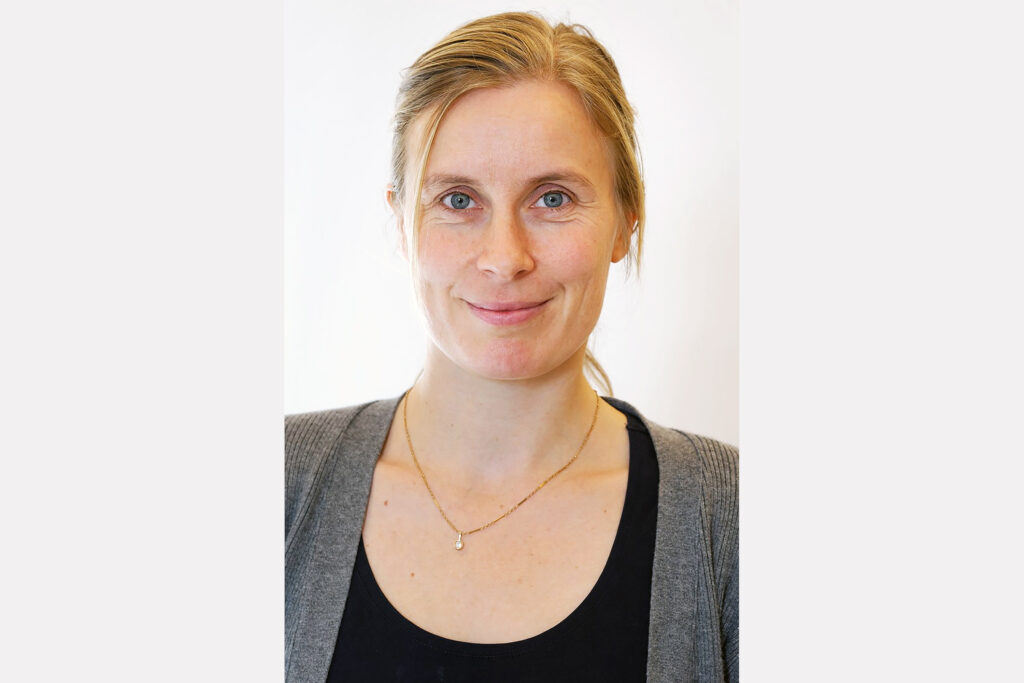
CRC 1182 member Eva Stukenbrock appointed as a member of the Leopoldina
The German National Academy of Sciences honours professor at Kiel University for her outstanding achievements in research of the evolutionary genomics of plant-pathogenic fun
The Leopoldina, the German National Academy of Sciences, has appointed Eva Stukenbrock, Professor for Environmental Genomics at Kiel University and Fellow at the Max Planck Institute for Evolutionary Biology in Plön (MPI-EvolBio), as its member, as the academy recently announced. Based in Halle an der Saale and founded in 1652, it is one of the most prestigious scientific societies in Germany and serves to provide independent and science-based policy advice on current socially relevant issues and to represent German science internationally. Around 1,700 distinguished scientific members from Germany and abroad and almost all fields of research are united within the institution.
Cutting-edge research into the relationships between crop plants and fungal pathogens
Following positions in Zurich, Aarhus and Marburg, among other places, Eva Stukenbrock has headed the Environmental Genomics research group at Kiel University and MPI-EvolBio since 2014. Together with her team, she investigates the genetic basis of mutual adaptations between microorganisms – particularly fungi – their host plants and the environment. “Internationally, Eva Stukenbrock is regarded as a leading scientist in the field of evolutionary genomics of fungal pathogens; her research contributions are ground-breaking for deciphering patterns of adaptive evolution and genomic architecture in fungi. The Leopoldina has now rightly recognised her achievements and appointed Eva Stukenbrock as a well-deserved new member – I congratulate her warmly on behalf of our institute,” emphasises Professor Arne Traulsen, Managing Director of MPI-EvolBio.
In their research, Stukenbrock and her team use the fungal pathogen Zymoseptoria tritici and related species as a model system to gain better insights into the molecular mechanisms underlying adaptive evolution and diversification. A more detailed understanding of how harmful fungi adapt to host plants and the associated evolution of resistance to pesticides is particularly relevant for the protection of crops. “With her pioneering work, for example on the relationships between plants, their microbiomes and pathogens, Eva Stukenbrock is establishing sound foundations for future plant protection strategies against fungal diseases to prevent massive crop failures worldwide – her appointment to the Leopoldina thus confirms the outstanding position she has achieved in her research field at an international level,” says Professor Eckhard Quandt, Kiel University’s Vice-President for Research.
The Leopoldina is increasingly drawing on expertise from Schleswig-Holstein
In recent years, Stukenbrock’s successful work has focused in particular on the interactions between host plants and their pests, and on identifying ecological factors that drive adaptive evolution in fungal pathogens. Furthermore, she and her research team have intensified their investigation into the co-evolution and interactions of microbial communities with wild and cultivated plants, and how these relationships affect susceptibility to plant pathogens. In doing so, Stukenbrock has advanced the field of evolutionary genomics as a whole and laid the groundwork for addressing current societal challenges such as safeguarding food security.
At the Leopoldina, she will use her expertise to make an active contribution to advancing the “Organismic and Evolutionary Biology” section. In addition to her scientific duties, the evolutionary biologist will also support public activities of the academy. Among other things, the external Leopoldina symposium “Sensing in the Metaorganism” is planned for spring 2027 in Kiel, which Stukenbrock is organising together with Kiel University’s Professor Thomas Bosch, also a member of the Leopoldina.
In addition to her successful research, in her dual role as a professor at Kiel University and a Max Planck Fellow in Plön, Stukenbrock also significantly contributed to the close collaboration between Kiel University and the MPI-EvolBio. Her efforts thus strongly supported establishing the Kiel region as a unique hotspot in evolutionary research in Germany. In addition, Eva Stukenbrock succeeded in locally bringing together plant researchers by founding the “Kiel Plant Center” (KPC) as part of the Kiel University’s priority research area “Kiel Life Science” (KLS). This is evident, among other things, in her securing of the DFG Research Unit “PlantsCoChallenge” on plant adaptations to global change, which she is heading since 2024. Overall, in appointing Stukenbrock, the Leopoldina is recognising not only her scientific excellence but, in particular, her commitment to strengthening and networking plant and evolutionary research at Kiel University and its partner institutions.
About the Leopoldina:
Founded in 1652, the German National Academy of Sciences Leopoldina is a traditional scientific society with around 1,700 members from 30 countries and almost all scientific disciplines. In 2008, it was named Germany’s National Academy of Sciences. Independent of economic or political interests, it works scientifically on important social issues of the future, communicates the results to politicians and the public and represents these issues both nationally and internationally. It is the oldest continuously existing scientific and medical academy in the world and elects outstanding scientists as its members. Since its foundation, more than 7,000 personalities have been appointed. These include Marie Curie, Charles Darwin, Albert Einstein, Johann Wolfgang von Goethe, Alexander von Humboldt, Justus von Liebig and Max Planck.
Images are available for download:
www.uni-kiel.de/de/pressemitteilungen/2026/086-stukenbrock-leopoldina-es.jpg
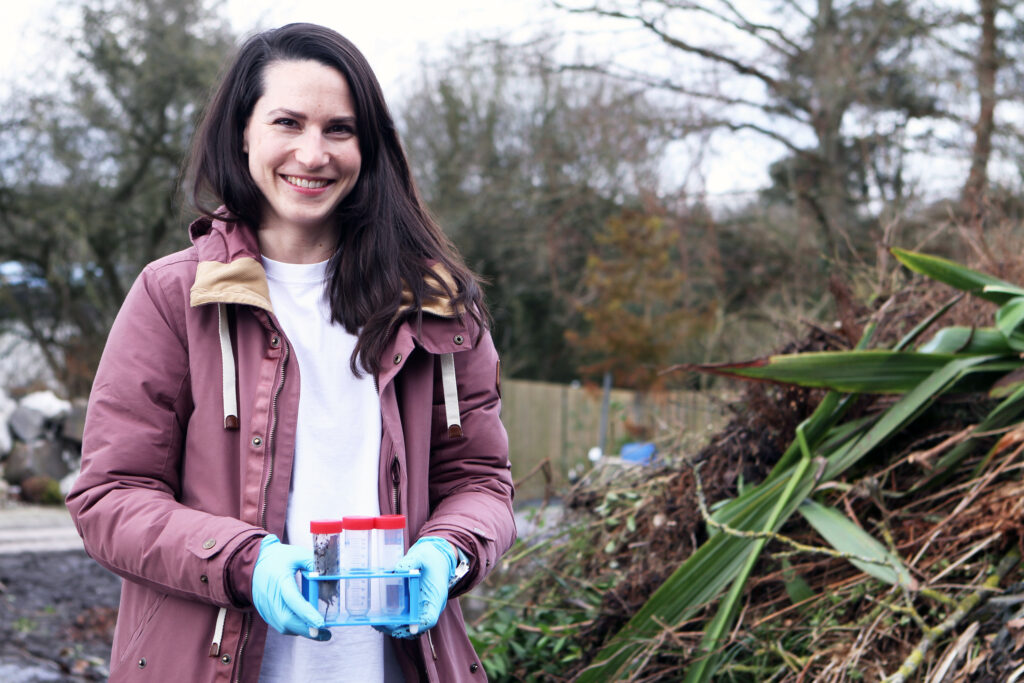
Caption: Eva Stukenbrock, Professor of Environmental Genomics at Kiel University and Fellow at the MPI-EvolBio in Plön, was recently elected a member of the German National Academy of Sciences Leopoldina. © Kiel University
Contact:
Prof. Eva Stukenbrock
Environmental Genomics group, Botanical Institute, Kiel University
/ Max Planck Institute for Evolutionary Biology, Plön:
Phone: +49 431-880-6368
Email: estukenbrock@bot.uni-kiel.de
More information:
German National Academy of Sciences Leopoldina:
www.leopoldina.org
Environmental Genomics group, Botanical Institute, Kiel University:
/ Max Planck Institute for Evolutionary Biology, Plön:
www.evolbio.mpg.de/2984078/environmentalgenomics
Kiel Plant Center (KPC), Kiel University:
www.plant-center.uni-kiel.de
DFG-Forschungsgruppe (FOR) 5640 „PlantsCoChallenge“:
www.plantscochallenge.de
Priority research area Kiel Life Science (KLS), Kiel University:
www.kls.uni-kiel.de