
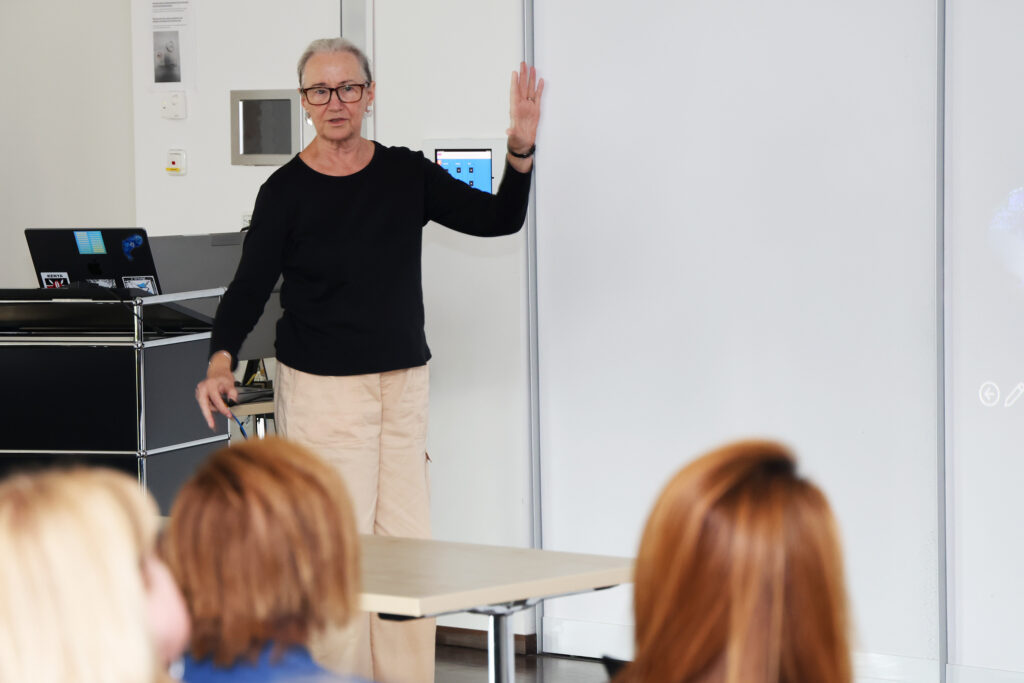
Möbius Fellow Margaret McFall-Ngai again visits the CRC 1182 in Kiel
The renowned US microbiologist and adviser to the Collaborative Research Centre 1182 presented new research findings on the establishment of host-microbe symbioses at Kiel University alongside Prof. Ned Ruby.
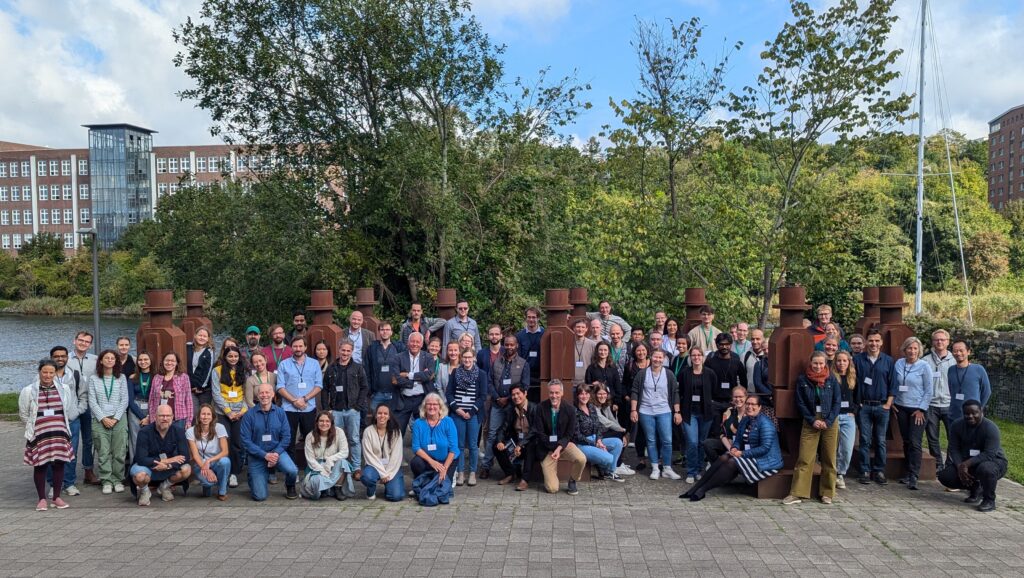
Last Friday, 18 September, members of the Collaborative Research Centre (CRC) 1182 „Origin and Function of Metaorganisms“ at Kiel University welcomed special guests to Kiel: Professor Margaret McFall-Ngai and Professor Edward (Ned) Ruby, both from the California Institute of Technology (Caltech) and Carnegie Science in Pasadena, USA, two of the most renowned pioneers in metaorganism research.
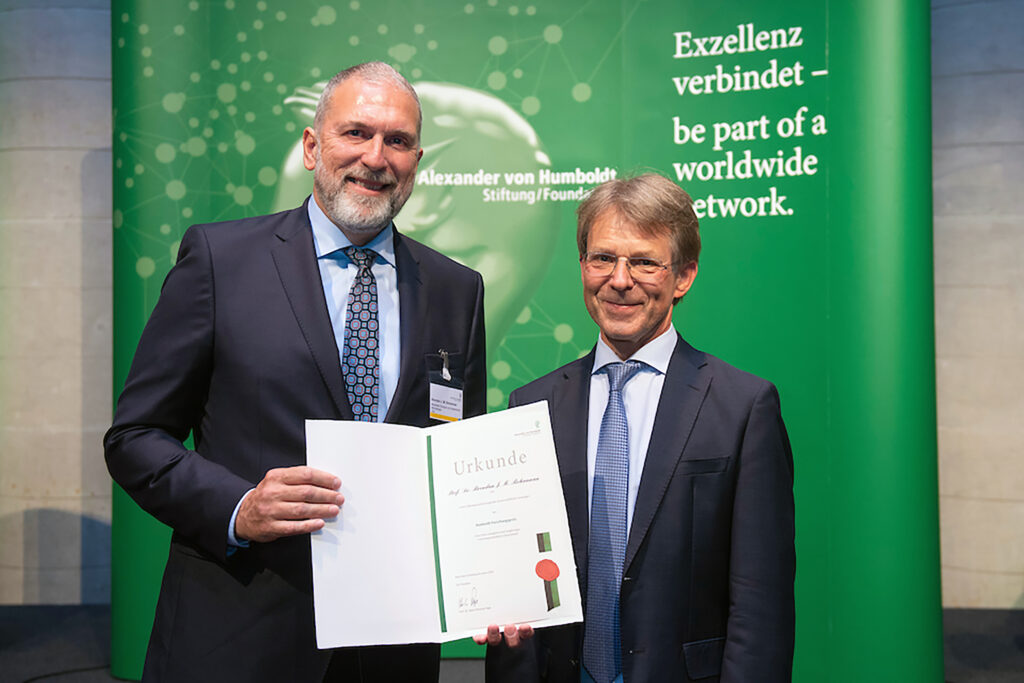
In 2024, microbiologist McFall-Ngai was awarded the Karl August Möbius Fellowship by the CRC 1182 in recognition of her outstanding research achievements and her contribution to shaping the new field of metaorganism research. Together with her colleague Ruby, she was able to obtain fundamental insights into the interaction between microorganisms and multicellular host organisms, thereby paving the way for modern symbiosis research. For many years, McFall-Ngai has also supported the CRC 1182 as a member of its scientific advisory board.
Pioneering work in symbiosis research
Throughout her career, Margaret McFall-Ngai, who also holds a honorary doctorate from Kiel University, has made fundamental contributions to recognizing the importance of microorganisms as indispensable symbionts of their host organisms. As one of the first researchers to do so, she succeeded in characterizing the essential influence of the microbiome on numerous life history processes of the host, using the symbiosis between the Hawaiian bobtail squid and the bioluminescent bacterium Vibrio fischeri as a model – thereby placing the beneficial effects of symbioses with microorganisms into the scientific spotlight.
“Through their pioneering work, Margaret McFall-Ngai and Ned Ruby have paved the way for establishing the current understanding of host-microbe interactions as a key player in both health and disease of the whole organism. As their colleagues in Kiel, we are particularly grateful to both of them for their long-standing support and cooperation, which have played a critical role in the development of metaorganism research at Kiel University,” emphasizes Professor Hinrich Schulenburg, spokesperson for the CRC 1182.
Their discoveries included the crucial role of symbionts in influencing the development of the host organism as well as regulating its circadian rhythm. Furthermore, they identified the mechanisms by which host organisms control their microbial colonization and can thus actively select their symbionts.
As part of their current visit to Kiel, McFall-Ngai and Ruby presented their most recent findings on symbiosis: McFall-Ngai explained how the bobtail squid – which has maintained its unique symbiotic relationship with bacteria for millions of years – recruit their symbionts and how this partnership is established. In doing so, she focused in particular on the initial colonization of the squid embryo, during which the animals effectively ‘select’ the bacterium V. fischeri from a vast number of other possible bacterial species. Ruby then explained which molecular mechanisms – such as an intensive exchange of proteins and RNA molecules – continue to shape this symbiosis and thereby support the development of the growing squid.
Contact:
Prof. Hinrich Schulenburg
Spokesperson CRC 1182
„Origin and Function of Metaorganisms“, Kiel University:
+49 431-880-4141
hschulenburg@zoologie.uni-kiel.de
More information:
Prof. Margaret McFall-Ngai,
California Institute of Technology (Caltech):
www.bbe.caltech.edu/people/margaret-j-mcfall-ngai
Prof. Edward Ruby,
California Institute of Technology (Caltech):
www.bbe.caltech.edu/people/ned-edward-ruby
Karl August Möbius Fellowship, CRC 1182 „Origin and Function of Metaorganisms“, Kiel University:
www.metaorganism-research.com/crc-1182-karl-august-mobius-fellowship-2